
We're mainly in laminating aluminum foil with various plastic films.

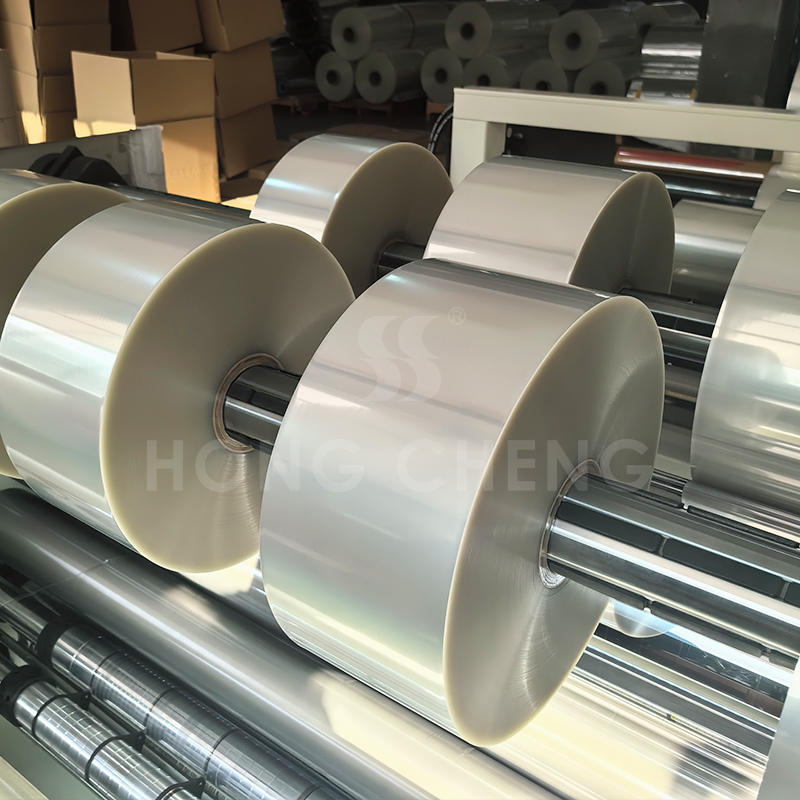
Packaging materials play a vital role in protecting products, extending shelf life, and ensuring transportation safety, with plastic films and aluminum foil being two of the most widely used materials in the packaging industry. Plastic films have long been favored for their low cost and light weight, but aluminum foil, with its unique material properties, has gradually become the preferred choice for high-demand packaging scenarios such as food, medicine, and electronics. Many industry practitioners and consumers often wonder about the specific advantages of aluminum foil over plastic films as a packaging material. This article details the core advantages of aluminum foil compared to plastic films, combines industry data, practical application cases, and relevant standards, provides professional insights for packaging manufacturers, procurement personnel, and industry practitioners, complies with relevant norms, avoids extreme words, and is optimized for SEO to meet the information needs of industry users.
One of the most prominent advantages of aluminum foil as a packaging material compared to plastic films is its superior barrier performance, which can effectively block multiple external factors that affect product quality. Plastic films, especially ordinary polyethylene (PE) and polypropylene (PP) films, have limited barrier capabilities against gases, moisture, and light. Even modified plastic films (such as barrier films with EVOH layers) cannot match the comprehensive barrier performance of aluminum foil.
Aluminum foil, as a dense metal material, has almost zero permeability to gases (such as oxygen, carbon dioxide, and nitrogen), moisture, and volatile substances. This means that products packaged with aluminum foil can be completely isolated from the external environment, preventing oxidation, moisture absorption, and odor penetration. For example, in food packaging, oxygen penetration is one of the main causes of food spoilage. Aluminum foil packaging can reduce the oxygen transmission rate (OTR) to less than 0.1 cc/(m²·24h·atm), while ordinary plastic films have an OTR of 50-100 cc/(m²·24h·atm), and even high-barrier plastic films can only reduce it to 1-5 cc/(m²·24h·atm). This significant difference makes aluminum foil more suitable for packaging perishable foods such as meat, dairy products, and snacks, extending their shelf life by 2-3 times compared to plastic film packaging.
In addition to gas and moisture barrier, aluminum foil also has excellent light-shielding performance, which is another advantage over plastic films. Most plastic films are transparent or translucent, allowing light (especially ultraviolet light) to penetrate, which can cause photooxidation of products, leading to color fading, nutrient loss, or performance degradation. For example, vitamins in food, active ingredients in medicines, and sensitive components in electronic components are all prone to damage under light irradiation. Aluminum foil is completely opaque, can block 100% of light, and effectively protect the internal products from light damage. This is particularly important for pharmaceutical packaging and high-end food packaging, where product stability is critical.
Another key advantage of aluminum foil over plastic films is its better thermal stability and heat resistance. Plastic films are prone to deformation, melting, or releasing harmful substances when exposed to high temperatures (usually above 60-80℃). For example, PE films begin to soften at 60℃ and melt at 110℃, making them unsuitable for high-temperature sterilization or microwave heating. In contrast, aluminum foil has a melting point of about 660℃ and can withstand high temperatures of up to 200℃ for a short time, making it suitable for high-temperature sterilization processes such as retort sterilization and boiling sterilization.
This heat resistance expands the application scope of aluminum foil packaging. For example, retort food (such as canned meat and braised products) needs to be sterilized at 121℃ for 20-30 minutes. Aluminum foil packaging can withstand this high temperature without damage, while plastic film packaging can only be used for low-temperature sterilized products. In addition, aluminum foil can be used for microwave heating (with proper design), while most plastic films are not microwave-safe, limiting their application in ready-to-eat food packaging. Industry data shows that the market share of aluminum foil in high-temperature sterilized food packaging is more than 70%, far exceeding that of plastic films.
Aluminum foil also has better mechanical performance and puncture resistance compared to most plastic films. Ordinary plastic films are thin and fragile, prone to tearing or puncturing during transportation and handling, leading to packaging failure. Aluminum foil, despite its thin thickness (usually 0.01-0.1mm), has good tensile strength and ductility, and is not easily torn or punctured. For example, the tensile strength of 1060 series aluminum foil used in packaging is not less than 75 MPa, while the tensile strength of ordinary PE films is only 15-30 MPa. This makes aluminum foil packaging more durable during transportation and storage, reducing the risk of product damage caused by packaging failure.
In addition, aluminum foil has good formability and adaptability, which is more flexible than plastic films in packaging design. Aluminum foil can be easily cut, folded, and formed into various shapes, such as bags, boxes, and wraps, to adapt to different product sizes and shapes. It can also be compounded with other materials (such as paper, plastic, and non-woven fabric) to form composite packaging materials, combining the advantages of multiple materials. For example, aluminum foil + PET film composite packaging has both the barrier performance of aluminum foil and the flexibility of plastic film, which is widely used in snack and candy packaging. Plastic films, although flexible, have limited formability and are difficult to form complex shapes without special processing.
Environmental friendliness is another important advantage of aluminum foil compared to plastic films, especially in the context of global environmental protection and plastic reduction policies. Most plastic films are made of non-degradable petroleum-based materials, which are difficult to degrade naturally after being discarded, causing serious environmental pollution (such as white pollution). In contrast, aluminum foil is a 100% recyclable material, and its recycling rate is much higher than that of plastic films. According to industry statistics, the global recycling rate of aluminum foil is about 70%, while the recycling rate of plastic films is only 10-15%.
Moreover, the recycling process of aluminum foil consumes only 5% of the energy required to produce primary aluminum, which is highly energy-saving and environmentally friendly. Recycled aluminum foil can be reused to produce new aluminum products, forming a circular economy. Although some degradable plastic films have been developed in recent years, their cost is high, and their performance (such as barrier and mechanical properties) is not as good as aluminum foil. For enterprises pursuing green development, aluminum foil packaging is a more environmentally friendly choice that conforms to the development trend of low-carbon and sustainable development.
In terms of product safety, aluminum foil also has obvious advantages over plastic films. Qualified food-grade aluminum foil is non-toxic, odorless, and does not release harmful substances when in contact with food, even at high temperatures. It meets the strict safety requirements of food and pharmaceutical packaging. In contrast, some low-quality plastic films may contain harmful additives (such as plasticizers and stabilizers), which may migrate into food or medicines under high temperature or long-term contact, posing potential health risks.
For example, in pharmaceutical packaging, aluminum foil is widely used for blister packaging of tablets and capsules. Its non-toxic and stable properties ensure that it does not react with the active ingredients of medicines, ensuring the safety and effectiveness of medicines. Plastic films, even food-grade ones, may have limited compatibility with some medicines, leading to drug degradation or contamination. This is why aluminum foil is the preferred material for high-end food and pharmaceutical packaging.
Practical application cases further verify the advantages of aluminum foil over plastic films. In the food industry, a well-known snack brand replaced plastic film packaging with aluminum foil packaging for its potato chips. The results showed that the shelf life of the potato chips was extended from 6 months to 12 months, and the crispness and taste of the potato chips were better maintained. In the pharmaceutical industry, a pharmaceutical company used aluminum foil blister packaging instead of plastic blister packaging for its antibiotics, which effectively prevented moisture and light from affecting the drug, reducing the failure rate of the drug by 80%.
In the electronic industry, aluminum foil is used to package sensitive electronic components (such as chips and circuit boards). Its excellent barrier performance and electromagnetic shielding performance can prevent moisture, dust, and electromagnetic interference from damaging the components, while plastic films cannot provide effective electromagnetic shielding. This makes aluminum foil an indispensable packaging material in the electronic industry.
It should be noted that aluminum foil also has some limitations compared to plastic films, such as higher cost and poor transparency. Plastic films are more cost-effective for low-demand packaging scenarios (such as ordinary commodity packaging), and their transparency allows consumers to see the product inside, which has certain marketing advantages. However, for scenarios that require high barrier performance, heat resistance, safety, and environmental friendliness, aluminum foil’s advantages are irreplaceable.
Industry standards also provide clear guidance for the application of aluminum foil and plastic films in packaging. In China, GB/T 22648-2023 “Aluminium foils used for aluminium-plastic composite tube and packaging pouch of battery” specifies the quality requirements of aluminum foil for packaging, ensuring its safety and performance. GB 4806.1-2016 “National Food Safety Standard for Food Contact Materials and Articles General Safety Requirements” specifies the safety requirements for both aluminum foil and plastic films used in food packaging. Internationally, standards such as ISO 8543-1:2017 and ASTM B479-2020 also provide unified benchmarks for aluminum foil packaging, while plastic films are regulated by standards such as ISO 10993 and ASTM D1922.
With the continuous improvement of consumer demand for product quality and environmental protection awareness, the application of aluminum foil in the packaging industry is becoming more and more extensive. Manufacturers are constantly optimizing the production process of aluminum foil, developing thinner, more flexible, and more cost-effective aluminum foil products, to further expand its advantages over plastic films. For example, high-purity aluminum foil with better barrier performance and nanocoated aluminum foil with enhanced corrosion resistance have been widely used in high-end packaging scenarios.
For packaging practitioners, understanding the advantages of aluminum foil compared to plastic films is crucial for selecting appropriate packaging materials. According to the product characteristics, shelf life requirements, and environmental protection needs, choosing aluminum foil or plastic films can not only ensure product quality but also reduce packaging costs and environmental impact. For example, perishable foods, high-end medicines, and sensitive electronic components should choose aluminum foil packaging, while ordinary commodities with short shelf life can choose plastic film packaging.
Some people may think that the higher cost of aluminum foil limits its application, but in the long run, the advantages of aluminum foil in extending product shelf life, reducing product loss, and being environmentally friendly can offset the higher initial cost. For example, aluminum foil packaging can reduce food spoilage loss by 30-50%, which brings significant economic benefits to enterprises. In addition, with the advancement of recycling technology, the cost of recycled aluminum foil is gradually decreasing, making aluminum foil more competitive in the packaging market.
In conclusion, compared to plastic films, aluminum foil has multiple obvious advantages as a packaging material, including superior barrier performance (gas, moisture, and light), better thermal stability and heat resistance, stronger mechanical performance and puncture resistance, good formability and adaptability, higher environmental friendliness, and better product safety. These advantages make aluminum foil the preferred material for high-demand packaging scenarios such as food, medicine, and electronics, and its application scope is constantly expanding with the development of the packaging industry.
While plastic films still have their own advantages in cost and transparency, aluminum foil’s irreplaceable advantages in high-performance and environmentally friendly packaging will become more prominent in the context of global energy conservation and environmental protection. With the continuous advancement of technology, aluminum foil packaging will be further optimized, providing more high-quality, environmentally friendly, and cost-effective packaging solutions for various industries.


Hangzhou Hongcheng Technology Co., Ltd. sitemap
本网站使用 cookie 来确保您在我们的网站上获得最佳体验。






评论
(0)